

The Architecture of Motherhood
Psychodynamic Therapy

You thought you had it together, then you became a mother, and old wounds you thought had healed resurfaced.
You find yourself reacting to your child in ways that feel automatic or painfully familiar, even if you promised you’d never parent that way. You feel a heavy weight of guilt or feel like you are losing your identity in motherhood.

You might have good intentions to parent differently. To stay calmer, set better boundaries, or stop the cycle of trauma passed down, but you find yourself falling into the same reactive patterns. Becoming a parent can awaken deeper emotional patterns, old wounds, and unconscious dynamics that we thought were healed.
Psychodynamic therapy is the process of looking beneath the surface of the daily chaos, particularly in Silicon Valley. We explore the internal blueprint you carried into parenthood: the collection of early experiences, family narratives, and subconscious expectations that influence how you show up today. We move you from reactive parenting to intentional parenting.

-
A term coined by, Selma Fraiberg, describing how unresolved issues, traumatic experiences, and relationship patterns of the parent’s childhood are brought into their child’s own nursery. In summary, how generational trauma is passed down from parent to child. These patterns may seem obvious in some situations or subconscious in others. Together, we uncover all these patterns over your present-day reactions, allowing you to parent from a place of choice rather than habits.

-
The identity earthquake of matrescence often reveals a conflict between the person you were and the parent you are becoming. We look at these identities through a psychodynamic lens, exploring the grief, ambition, and expectations that define your identities as a mother, an individual, and a professional. We work to integrate these parts so you can feel like a whole person again.

-
The importance of understanding our history of attachment to connect how you relate to your child today. If we aren’t being intentional, then we will parent how we were parented. By understanding your own "internal working model" of relationships, we can strengthen the child-parent relationship. This isn't about blaming the past, but it’s about gaining clarity about your patterns as a parent and making the intentional choices on how you want to show up, including supporting your child’s development.
In our sessions, we move beyond the "to-do list" of parenting to look at the internal landscape of your life. This approach supports you by
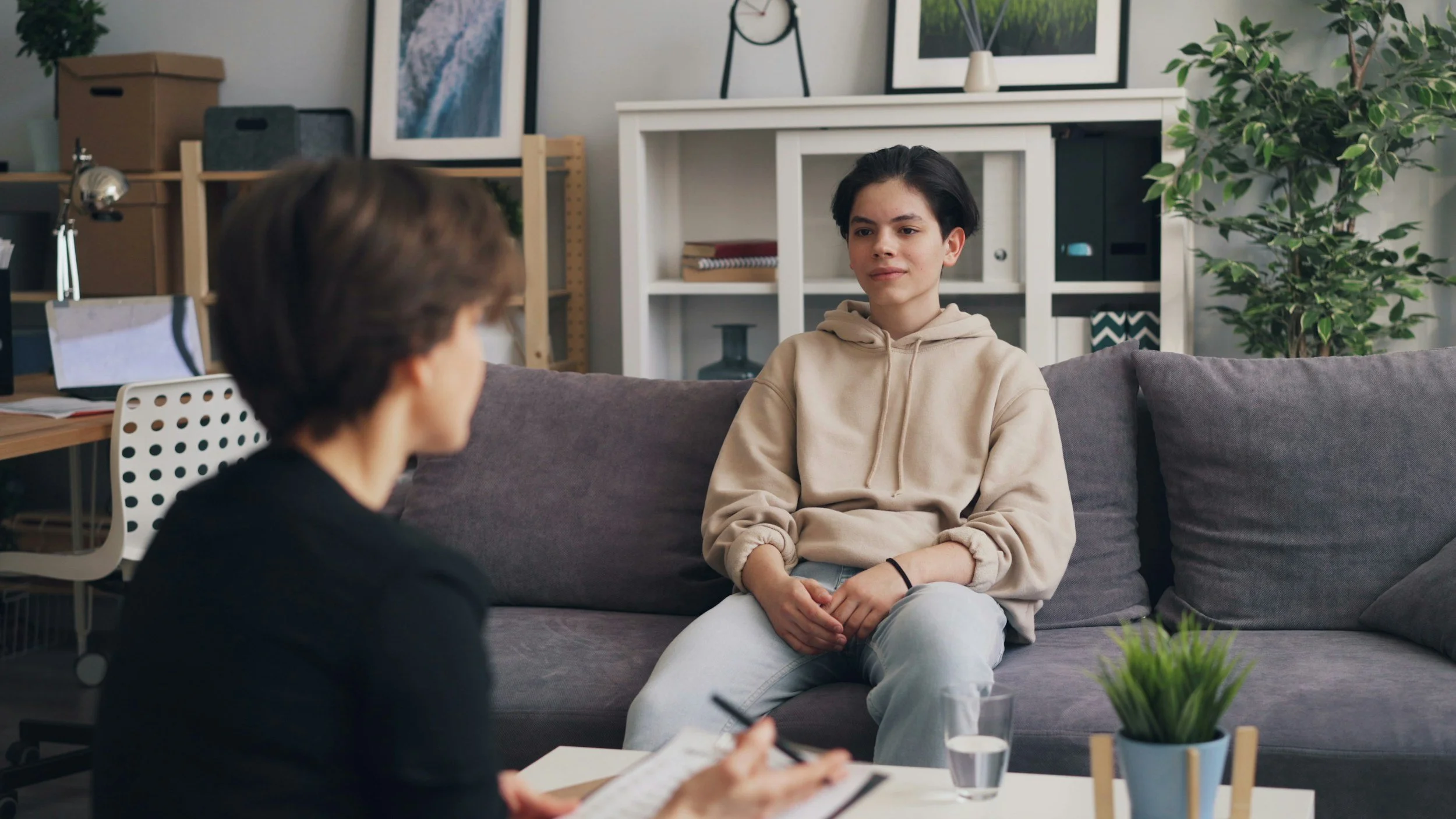
Identifying Your Internal Blueprint: We look at the family narratives you have carried into motherhood, helping you understand why certain moments feel so high-stakes or triggering.
Healing the "Ghosts in the Nursery": We bring awareness to generational patterns, giving you the power to consciously choose how you want to parent, rather than "automatic" programming, especially if you experienced trauma during birth.
Integrating the Identity Earthquake: We explore the tension between your professional self, personal self, and your maternal self, helping you bridge the gap so you feel like a whole, integrated human being again.
Strengthening Reflective Functioning: You will learn to see how the mind is connected to one’s behavior, yours and your child's, which reduces mom guilt and creates a deeper, more secure child-parent relationship.
Cultivating Long-Term Resilience: By addressing the roots of your anxiety rather than just the symptoms, you build a regulated nervous system that you can share with your own child to develop their nervous system.
Frequently Asked Questions
-
Psychodynamic therapy is an insight-oriented approach that explores how your past experiences, early relationships, and unconscious patterns influence your current emotions and behaviors as a parent. By bringing these unconscious patterns and thoughts to the surface, you can break generational cycles and make more intentional choices for your family.
-
Parenthood is a massive "trigger" for our own early memories. We use this approach to look at the "ghosts in the nursery"—the old patterns or parenting styles you inherited, so you can decide what to keep and what to break. It’s about becoming a conscious parent rather than a reactive one.
-
Venting provides temporary relief and a chance to validate that your not alone in your experience, which can be beneficial. Psychodynamic therapy provides structural change. As your therapist, I am listening for the patterns, the 'ghosts in the nursery,' and the subconscious beliefs that a friend might miss. We are working to shift the way your mind processes stress so that your reactions become intentional rather than automatic.
-
Guilt often stems from unconscious "rules" we’ve set for ourselves. By exploring where those rules came from, we can release the pressure of perfection and help you develop a more compassionate relationship with yourself.
-
Not at all. Psychodynamic work is about insight, not blame. It’s about acknowledging and understanding the environment you were raised with so you can decide which parts of that foundation you want to keep and which parts you are ready to rebuild. Understanding your history is actually the fastest way to stop passing down generational patterns.
-
Many Silicon Valley parents feel this way! While this work is deep, it is not aimless. We are identifying the specific 'Identity Earthquake' triggers that keep you in a cycle of over-performing and burnout. Many clients find that the deep work actually makes the practical tools, such as setting boundaries at work or managing a 2:00 AM wake-up, much more effective.
-
Because we are working on the 'Internal Blueprint' rather than just surface-level symptoms, this is often a mid-to-long-term process. However, many parents report a sense of relief through clarity within the first few sessions. We move at a pace that allows you to integrate these insights into your daily life without adding to your mental load.