

Trying to find the right child care setting for your family can be one of the most emotionally difficult decisions to make for any new parent. It is not just about finding a place that will watch and keep your child safe for the day, but it is finding a place that you build a partnership, community, and trust with another caregiver. This process bringd up a lot of conflicting emotions, ranging from excitement and relief to anxiety, guilt, and even shame.
As a therapist specializing in infant mental health and early childhood development, I work closely with my clients to help them navigate this process with clarity, confidence, and support in the choices that are right for their child and their family. The goal isn't just to find a physical slot for your child, but it is about finding the right responsive environment that is aligned with your family’s values. The non-profit Zero to Three, which focuses on advocacy around infant and early childhood development, highlights the importance of quality child care for supporting education, social-emotional development, and navigating the wider world as a member of a community.
This guide provides a road map to parents for better understanding how to evaluate a child care setting. I understand that every family has different values, priorities, and comfort levels with different child care environments. Many families will have nannies or family members to support with child care, which is a great option if that works for you and your family. However, if you do need a day care setting, whether an in-home or a center, whther it is infant care or preschool care, this guide is here to help you.

1. The Pre-Screen: What to Check for Before Going In
Before spending time scheduling and touring a potential center or in-home daycare, save your energy by conducting a preliminary check.
Licensing & Accountability
Verify that the provider is fully licensed by the local state authorities. In California, you can use the California Department of Social Services Facility Search to verify a provider's status. Beyond checking active licensing, you can also look up the facility's public history of citations. No day care setting will be without citations, so don’t be alarmed when you see these. Try to pay close attention to the frequency, severity, and trends of any past violations, and crucially, observe how the facility corrected them. National accreditation from organizations like the National Association for the Education of Young Children (NAEYC) is an excellent bonus, signaling a voluntary commitment to higher early childhood standards.
Health & Emergency Protocols
Once you a ready to contact a location, either ask these questions over the phone or you can ask them during an in-person tour. Ask about how the program and staff manage cleaning schedules, how they support medication administration, and what their policies are for when children get sick. For physical safety, its good to check the standard entry locks, but also ask about gating protocols, who is and isn’t allowed in the facilities, their protocol for confirming who can and cannot pick up a child from their program, and emergency response for addressing environmental crises like extreme heat, snow, floods, smoke advisories, power outages, or active shooter protocols. A high-quality program will have specific protocols in place and be able to address these realities with transparency and calm.
Staff Credentials & Turnover Rates
Inquire about the educational backgrounds, such as child development courses, AA vs BA degrees and years of experience, of the direct caregivers. You should also find out about their access or support to ongoing professional development. More specifically, ask about the staff turnover rate.
Clinical Insight: A high turnover rate is a major red flag for workplace burnout. More importantly for your child, high staff turnover can be disruptive to consistency, making it incredibly difficult for an infant or toddler to form the stable, secondary attachments they need to feel safe.
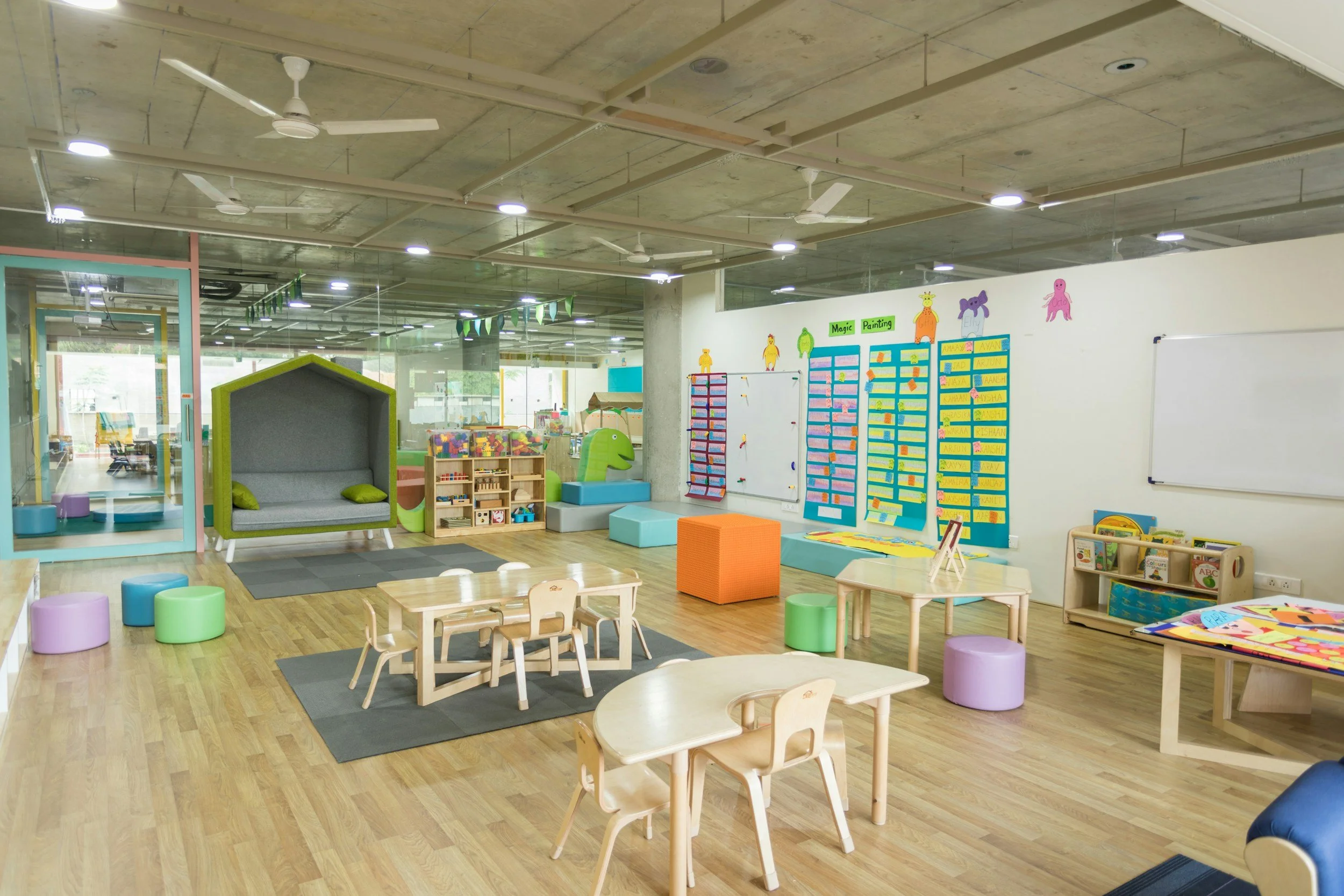
2. In-Person Observations: Does it Look Like a Place for Infants and Toddlers?
The in-person tour is where you move past basic qualifications and gather the day-to-day experience that informs your choice.
Ratios and Classroom Interactions
Make sure you are aware of the state-mandated staff-to-child ratios. In California, for example, there are strict mandate of 4:1 for infants and up to 12:1 for preschoolers over 36 months. Make sure you understand how the center maintains these ratios during teacher breaks and transitions to make sure the ratio is perserved and the teachers aren’t being overworked. Next, watch how teachers interact with the children. You want to see behaviors, such as getting down to children's eye level, speaking with warmth, respect, and emotional attunement. Pay particularly close attention to how the teachers will navigate an argument between two toddlers, particuarly if there is aggression like hitting or bitting, both very normal behaviors for toddlers, but key in understanding how they support early social-emotional learning and positive behavioral modeling. You want to see active, reflective co-regulation rather than passive observation or punitive discipline.
The Physical Space
Look at the classroom walls. Are they bare, or do they showcase the children’s original artwork and photographs? The physical space should feel organized and clean without looking sterile. Look for distinct, predictable zones: a cozy reading nook, a sensory play space, and a well-maintained outdoor playground that supports gross motor development. For in-home day cares specifically, make sure that any areas of the house that are not meant for the children, private bedrooms, pools, etc, are separated by gates and barriers. Ask the staff how they maintain the children’s safety in these scenarios. Finally, also clarify who is in the house during the times that your child is there and confirm that they are safe for the children to be around. For further guidance on evaluating early environments, the NAECY offers an excellent resource on creating responsive spaces for infants and toddlers.

3. The Human Connection and Trusting Your Intuition
After checking the practical boxes, you must evaluate the relational health of the program.
Behavioral Philosophies & Communication
Ensure the program's discipline philosophy aligns with yours. High-quality programs reject punitive measures, focusing instead on positive redirection and teaching emotional regulation skills. You will also want to clarify how the day care handles multiple biting or hitting incidents. You want to confirm that staff and directors prioritze work together with you as the parent to address the issue instead of having a policy of kicking kids out after a certain number of incidents. Finally, ask how they communicate daily rhythms (naps, feeding, emotional shifts), whether through a dedicated app or direct verbal check-ins. You are looking for a true collaborative partnership.
Honoring Your "Gut Feeling"
Your intuition shouldn’t be ignored in these situations as well. It will pick up on subtle micro-expressions, underlying tension, or environmental that just don’t come up when you look at a program on paper. If a space checks every single box on paper but leaves you feeling uneasy, honor that input.
When I was looking for child care for my own family, I toured a facility that looked good on paper. However, while showing me the infant napping room, the staff member casually mentioned, "I love monitoring nap time because it gives me a chance to scroll Facebook on my phone."
That single comment immediately triggered my intuition. It left me wondering about the active supervision and emotional availability of the staff when parents weren't looking. Even though the facility was beautiful, that comment didn't sit right. I took them off our list, kept touring, and eventually found a setting where our whole family felt secure.

Navigating the Transition Support
Holding the complex, heavy feelings of parental leave ending while simultaneously feeling excited to step back into your professional identity is a normal, healthy part of matrescence. Navigating the emotional logistics of returning to work after baby is a massive transition, and you do not have to carry the weight of this stress in isolation. If you are struggling with child-care anxiety or want professional guidance on navigating different child care options, I invite you to explore my Infant Insights services. We can work together to build confidence and peace of mind as your family moves into this next chapter. Feel free to reach out to schedule a free consultation.
