
Why Support for LGBTQIA+ Parents is Essential in Postpartum and Early Infant Attachment?
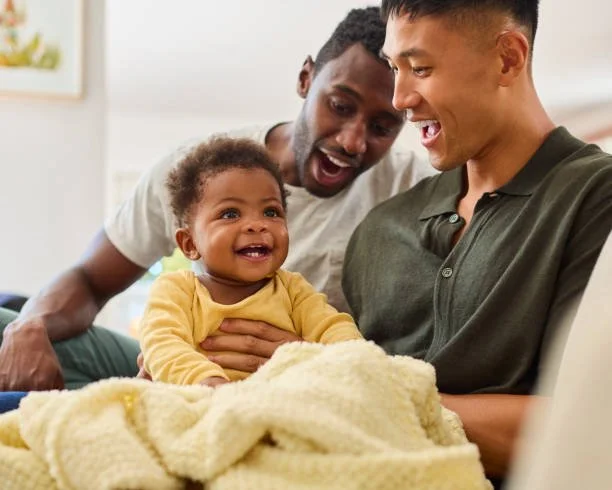
Whenever medical systems, providers, and even pop culture discuss the postpartum period, they frequently rely on traditional, heteronormative descriptions. But the identity shift parenthood and the building of early attachment bonds is a basic human experience that goes beyond gender binaries and traditional nuclear family narratives.
For lesbian, gay, bisexual, transgender, queer, and non-binary (LGBTQIA+) families, navigating the perinatal period and early childhood parenting comes with a specific set of emotional, relational, and systemic layers.
As a licensed therapist specializing in both perinatal mental health and infant/early childhood mental health, I understand that the compilation of a family is not what determines healthy, attached, attuned, and bonded parent-child relationships. Research by Dr. Bruce Perry shows that what infants need is a attentive, responsive, and loving relationship with their primary caregiver. The research does not state that these relationships have to be within a 2 parent household and those parents have to be a man and a woman. Centering the queer parenting experience isn't just about using inclusive language. It is about acknowledging their specific experience and providing the adequate support they need to manage their mental health during the postpartum period and, by extension, supporting infant mental health.

The Queer Experience During Perinatal Mental Health
Research consistently shows that LGBTQIA+ individuals experience higher rates of postpartum depression and anxiety than their cisgender, heterosexual peers. A study conducted at Mass General Brigham in Massachusetts found that LGBTQIA+ parents face significant barriers to accessing fertility treatments. There are also additional microaggressions, such as questioning of parentage, paperwork that specifically genders and documents heteronormative relationships, and policies that make family planning and building more complicated for queer parents.
The stress, hurdles, and judgments around these experiences to build a family don't disappear once the baby arrives. Non-birthing queer parents are frequently left out of hospital discharge discussions, pediatric forms, and support spaces. This systemic microaggressions can create a sense of isolation, grief, and hypervigilance, leading to a greater risk of Perinatal Mood and Anxiety Disorders (PMADs) diagnosis in one or both parents.

Protecting the Attachment Bond in Every Family
From an infant mental health perspective, the neurobiology of attachment remains identical across all families. A baby’s brain does not search for a specific gender. It searches for a caregiver who can provide a secure base, a consistent, responsive, and attuned response to the baby’s needs. This type of caregiving requires reading baby’s cues and regulating their nervous system, not a specific gender or sexuality.
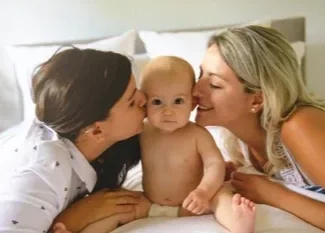
Whether a child has two moms, two dads, a non-binary parent, or trans parent, the development of secure attachment and relational wellness is created by a thousand daily micro-interactions to reinforce connection, bonding, love, and attunement. However, when parents are forced to constantly defend the legitimacy of their family to fertility specialists, doctors, or childcare centers, their emotional bandwidth is depleted. Systemic discrimination piles on additional stressors to the parent-child dyad, making it harder to access the calm, co-regulated states essential for parent and infant wellness.
Moving Toward Aligned Support
Queer and non-binary parents deserve spaces where they do not have to educate their providers to receive the same care as their heterosexual counterparts. Meaningful support requires recognizing that the identity earthquake of all parents, regardless of their gender identity or sexual orientation, is experienced during the postpartum period.
If you are navigating the emotional layers of queer parenthood, dealing with systemic barriers to creating/caring for your family, or managing the micro-aggressions from being a queer family, you are not alone. I invite you to explore my clinical services to learn more about how I can support you in your parenting journey.
